
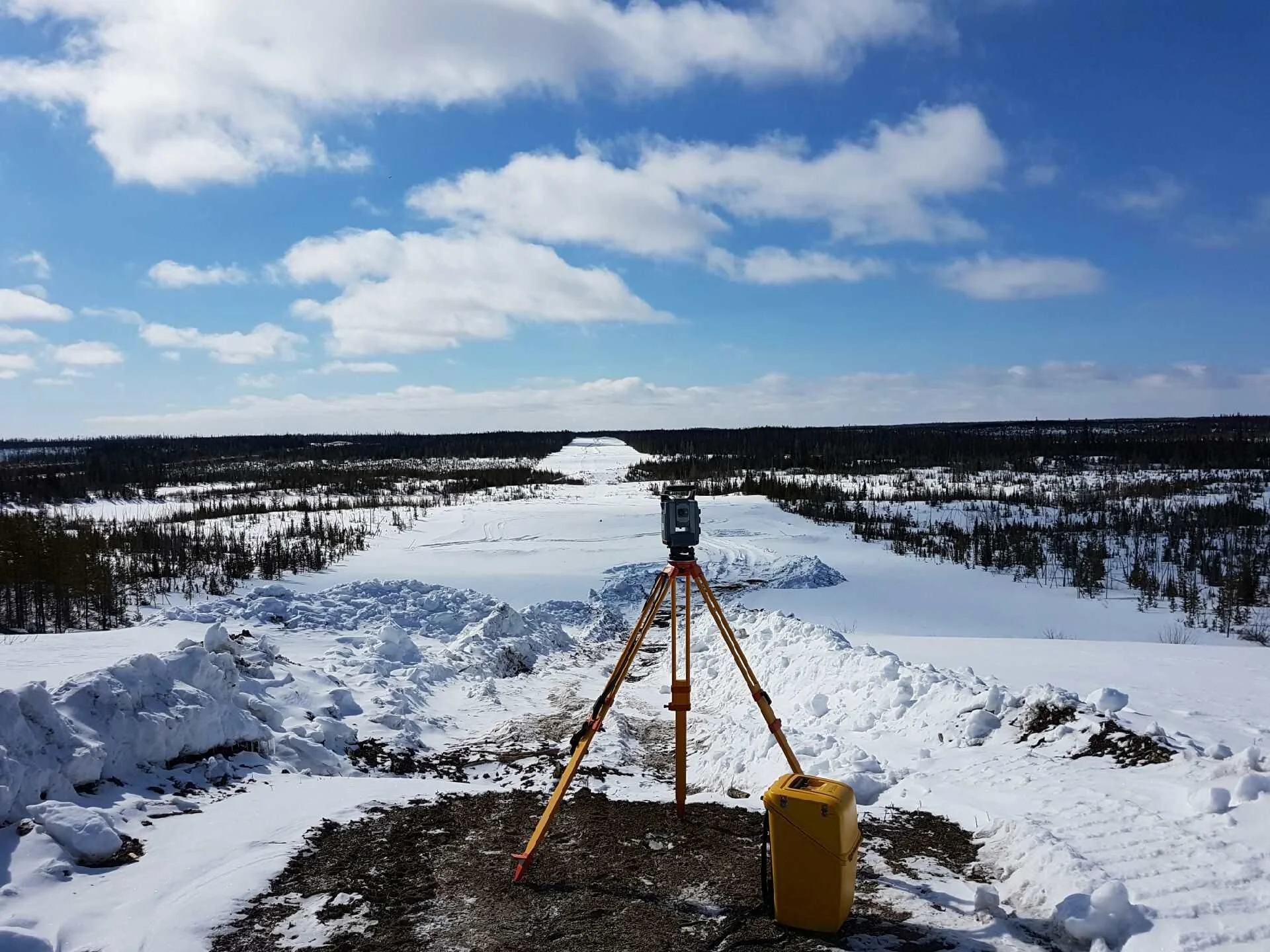
Powerlines & Substations
Accurate construction surveying services tailored to powerline and substation projects, providing precise layout, control, and verification to support complex electrical infrastructure construction, and ensure alignment with design, safety, and regulatory requirements.
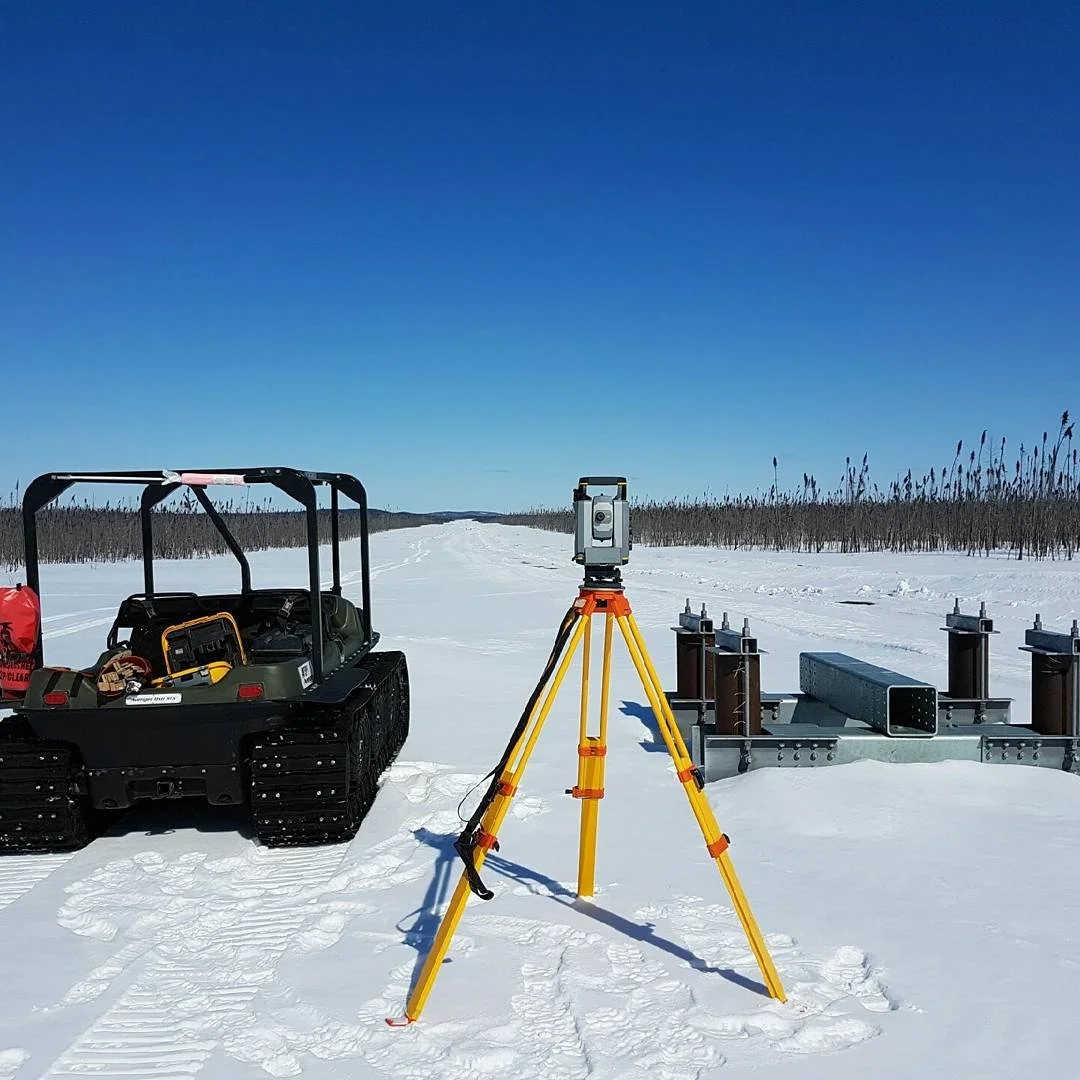
Powerline & Substation Construction Surveying
Powerline and substation construction demands a high level of survey accuracy to ensure safety, reliability, and compliance throughout every phase of development. Construction surveying services support these projects by establishing precise horizontal and vertical control, staking structures, foundations, and equipment locations, and verifying critical clearances and alignments. Ongoing field support and as-built documentation help confirm that installations meet design specifications, regulatory standards, and utility requirements, reducing risk and preventing costly rework. Through detailed, dependable surveying, powerline and substation projects progress with confidence from initial layout through final commissioning.
Here is a detailed breakdown of how professional geomatics drives the success of power and energy infrastructure:
The Framework: Geodetic Control and Corridor Alignment
Large-scale powerline projects often span vast distances and diverse topography. This requires the establishment of a Rigid Geodetic Control Network to ensure that every structure along the corridor is tied to a unified coordinate system.
Surveyors translate complex design alignments—including deflection angles, spans, and sag requirements—into real-world locations. By utilizing high-precision GNSS and Static Surveying, geomatics teams ensure that the centerline of the transmission corridor is established with absolute accuracy, preventing legal or regulatory encroachments on adjacent land and ensuring that the structural loads of the line are distributed exactly as engineered.
Substation Precision: Millimeter-Level Accuracy
Inside the substation fence, the focus shifts from kilometers to millimeters. Substations are densely packed with sensitive equipment, steel gantries, and concrete foundations that must align perfectly for successful electrical connectivity.
Anchor Bolt and Foundation Layout: Surveyors provide the layout for the massive foundations required for transformers and circuit breakers. Similar to commercial building construction, anchor bolt placement is critical; if a bolt is out of alignment, the prefabricated steel structures will not fit, causing massive delays.
Equipment and Buswork Alignment: Surveyors ensure that electrical buswork and high-voltage equipment are perfectly level and aligned to maintain the necessary electrical clearances.
Grounding Grid Verification: Geomatics teams often document the precise location of buried grounding grids before backfill, ensuring the site meets the specific resistivity and safety standards required to protect personnel and equipment from electrical faults.
Safety and Clearance: Sag, Swing, and Vegetation
One of the most vital roles of a surveyor in powerline construction is the verification of Critical Clearances. Electricity at high voltages requires specific "air gaps" to prevent arcing and system failure.
Wire-to-Ground and Wire-to-Wire Clearances: Using reflectorless total stations or UAV-based LiDAR, surveyors measure the "sag" of the conductors under various conditions. They verify that the line maintains safe distances from the ground, existing infrastructure, and other energized lines.
Danger Tree and Encroachment Analysis: Surveyors identify vegetation or physical structures that pose a risk to the line's "swing" during high winds. By providing precise spatial data, they help utilities manage long-term maintenance and prevent wildfire or outage risks.
Infrastructure Staking: Foundations and Structural Plumbness
The structural integrity of a powerline depends on the verticality and orientation of its poles and towers.
Structure Staking: Surveyors mark the exact location and orientation for lattice towers or monopoles, accounting for the specific "lean" or "rake" required for corner structures under tension.
Plumbness and Orientation Checks: After a tower is erected, surveyors verify that it is perfectly plumb and that the cross-arms are oriented exactly to the design azimuth. This ensures that the tension loads from the conductors are applied to the structure exactly as intended by the structural engineers.
As-Built Documentation and Asset Management
As the project moves toward commissioning, As-Built Documentation provides the permanent digital record of the asset.
Regulatory Compliance: Providing the final data required by governing bodies and utilities to prove that the infrastructure was built to code.
GIS Integration: Final survey data is typically formatted for the utility’s Geographic Information System (GIS), allowing for real-time asset management, remote monitoring, and rapid response during future maintenance or emergency repair scenarios.
By maintaining high-precision layout and continuous verification, construction surveying ensures that powerline and substation projects are delivered safely, on schedule, and ready to provide reliable energy for decades.